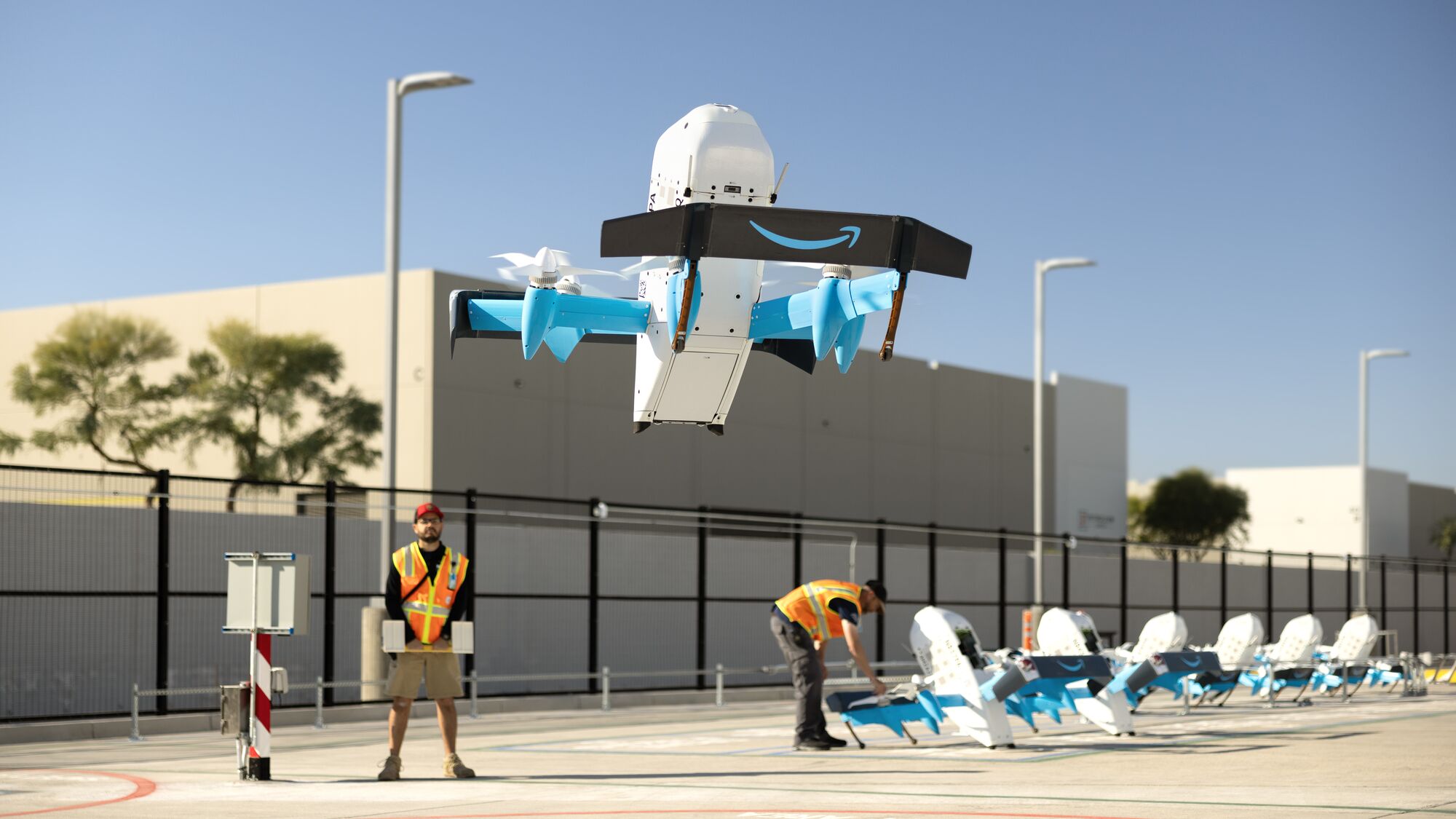
The expansion marks a shift from experimental pilot programs to a broader logistical network. By utilizing Part 135 air carrier certification and detect-and-avoid technology, Amazon aims to deliver items under five pounds—including groceries and electronics—in as little as 30 minutes. Customers in the Chicago, Atlanta, and Boise metro areas are among the next in line to gain access to the service, which requires a $2.99 fee for non-Prime members or smaller orders.
Scaling autonomous flight remains a complex operational challenge. Recent federal investigations followed incidents in Arizona and Texas involving drone collisions with infrastructure. Furthermore, Amazon faces stiff competition as rivals like Alphabet’s Wing, DoorDash, and Zipline aggressively build their own delivery networks. This race to the skies is further complicated by shifting trade policies, including new tariffs on foreign-made drone components that may favor companies utilizing domestic manufacturing.



Comments (0)
No comments yet. Be the first!