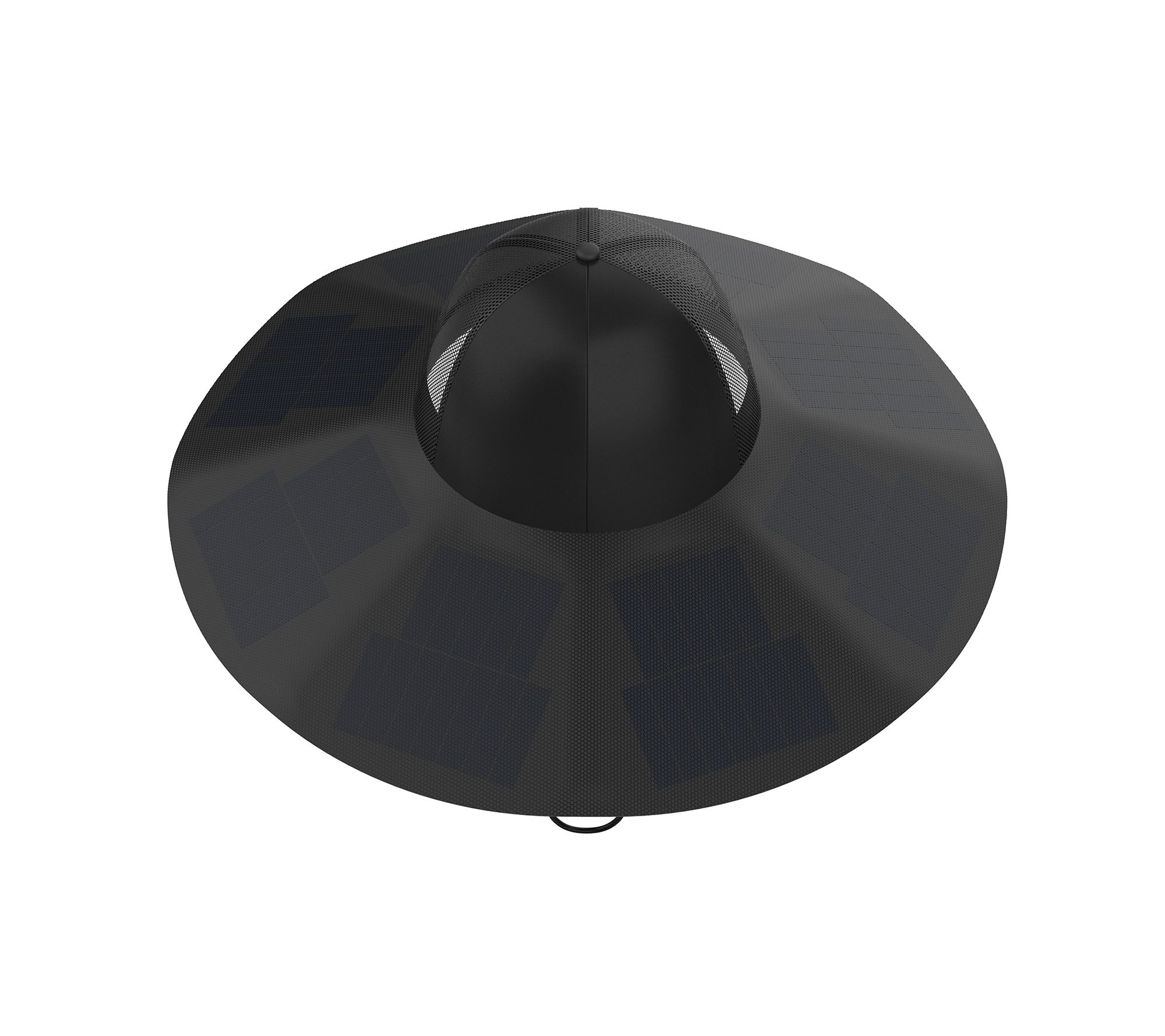
In testing, the hat proved surprisingly capable of replenishing battery life. When placed in direct summer sunlight, it successfully boosted a Google Pixel 8 from 83 percent to 93 percent in just 30 minutes. While the manufacturer advertises a peak power output of 12W, real-world usage typically hovered around 6W to 7W. The design includes both USB-C and USB-A ports, providing enough versatility to charge small electronics during a day of fishing, boating, or festival-going. Beyond the power capabilities, the wide brim offers significant 360-degree sun protection.
However, the device is not without notable trade-offs. Weighing in at roughly 0.8 pounds, the hat is heavy enough to leave indents on the forehead after prolonged use, and the solar panels can become uncomfortably hot to the touch under direct sun. Furthermore, dedicated portable solar panels from the same brand, such as the 28W or 45W options, offer significantly higher charging speeds for a lower price point. Unless the convenience of a wearable charger is a primary requirement, users may find that traditional foldable panels offer better value and higher efficiency without the burden of wearing the hardware.




Comments (0)
No comments yet. Be the first!