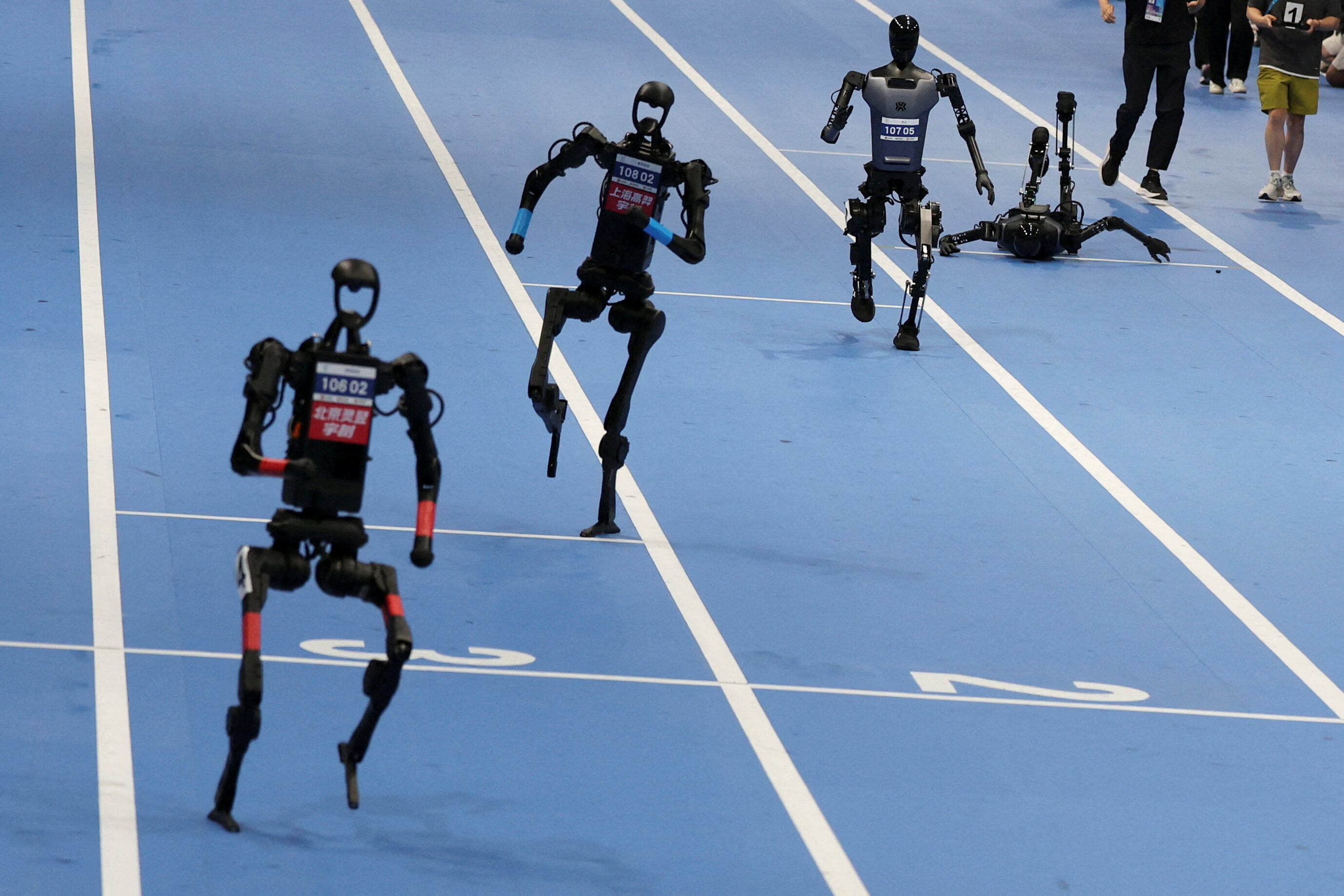
The scale of the competition has expanded significantly since its inaugural run, which featured 500 robots. This year, 2,056 robots from 666 teams representing 16 countries will compete across 50 events. Organizers have introduced new athletic challenges, including tug of war and weightlifting, alongside complex scenario-based tasks like charging electric cars and conducting fire rescues. To encourage progress, the games now mandate independent operation for events like breakdancing and the 4x100-meter relay, while scoring penalties apply to robots relying on human remote control.
Unitree, a dominant force in last year's medal tally, remains a primary contender. The company recently showcased its new 'Superman' robot, which claims a speed of 12.658 m/s—surpassing the record of Usain Bolt. However, pre-event testing has proven unforgiving. Robotics expert Eren Chen documented instances where competitors veered off-track or suffered catastrophic mechanical failures, including one unit that sparked and broke at the waist after hitting a wall. Chen suggests these mishaps stem from stricter autonomous requirements, noting that current development is shifting away from raw speed toward the more difficult challenges of safe navigation and decision-making in real-world environments.



Comments (0)
No comments yet. Be the first!